

Insurance engineering
Roof replacement engineering
For insurance repair builders and roofers replacing a roof after storm damage, and the adjusters approving the scope.
Why a roof replacement needs an engineer
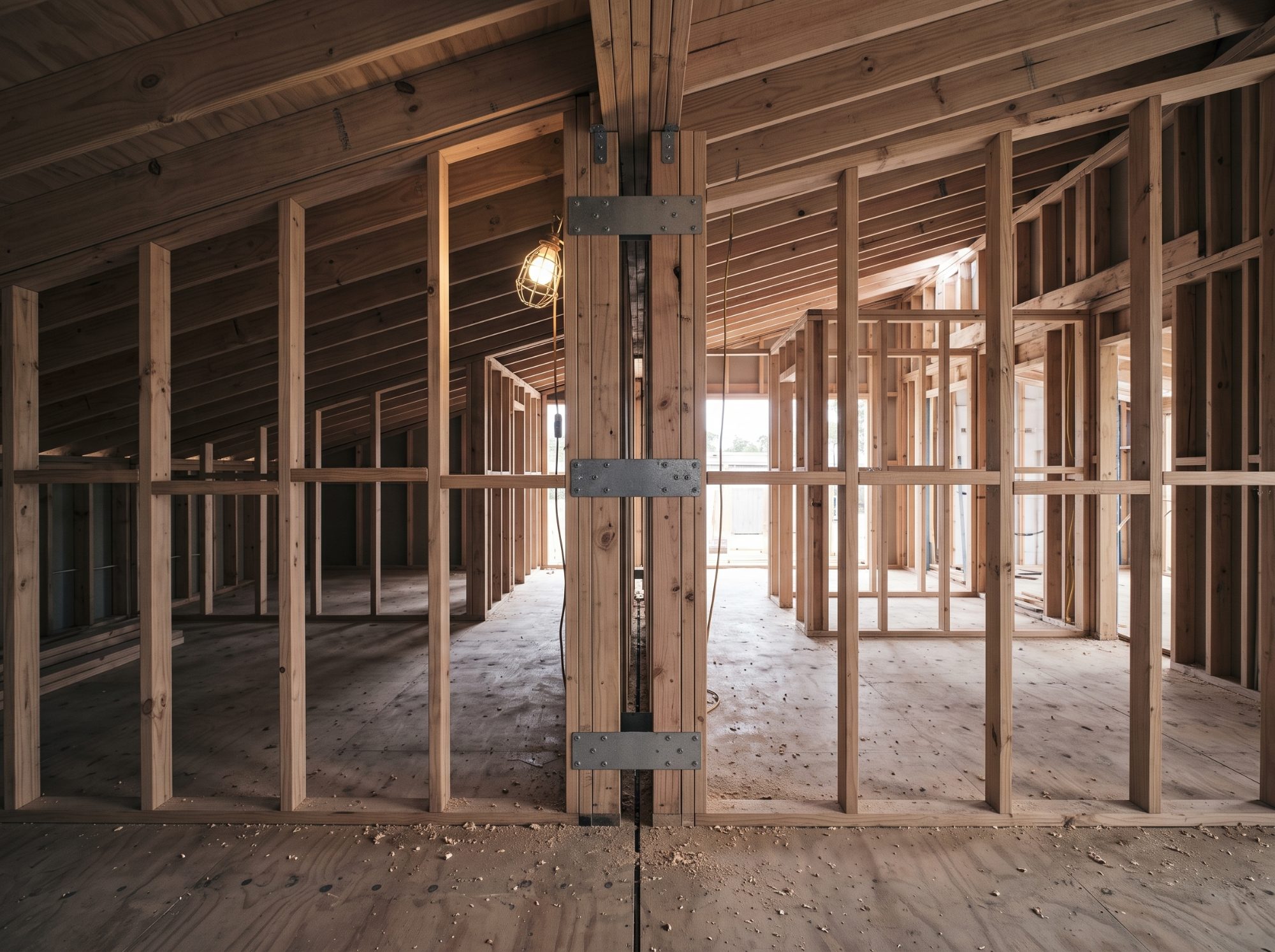
A new roof is fixed to a frame that was built to the standards of its day. Many older Queensland homes have battens, rafters and tie-downs that fall short of what the site’s current wind classification calls for. When the sheeting comes off, that shortfall is exposed, and the new roof is only as secure as the frame it’s fixed to.
New sheeting fixed to an unchecked frame leaves the weak point exactly where it was.
What we do
- Inspect the roof framing, battens and existing tie-downs
- Confirm the site’s wind classification to AS 4055
- Specify batten, rafter and truss fixings, and tie-down upgrades from the roof to the walls and further down where needed
- Provide drawings and Form 15 where the work needs them
- Inspect the completed framing and tie-down, and certify it
Getting the timing right
Bring us in while the scope is being set, not after the roof is off. If the scope allows for tie-down upgrades from the start, the builder isn’t stopping mid-job for a variation while the house is open to the weather.
Common questions
Frequently asked
Does every roof replacement need tie-down upgrades?
No. It depends on the existing framing and fixings and on the site’s wind classification. The inspection establishes what is adequate and what isn’t.
Can you inspect before the old roof comes off?
Yes. We can inspect the roof space first to flag likely upgrades for the scope. Batten and rafter fixings are usually confirmed once the old sheeting is off.
Do you work directly with roofers?
Yes, and with the builder or adjuster managing the claim.
Also in insurance engineering
Related pages
Send us the brief
Site address, roof photos and the proposed roofing scope are enough to get started.